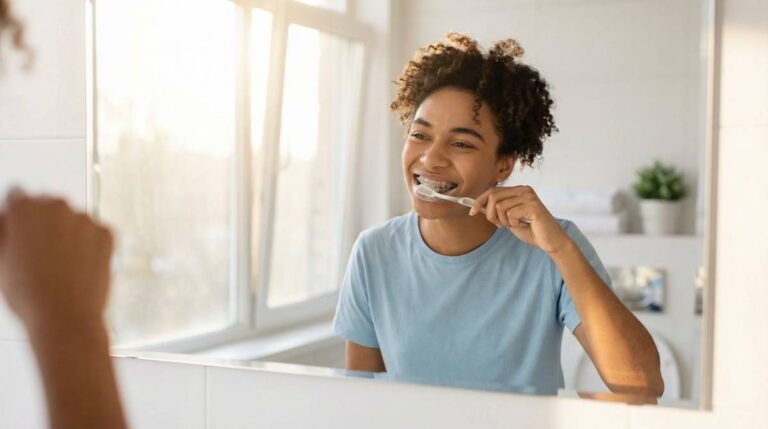
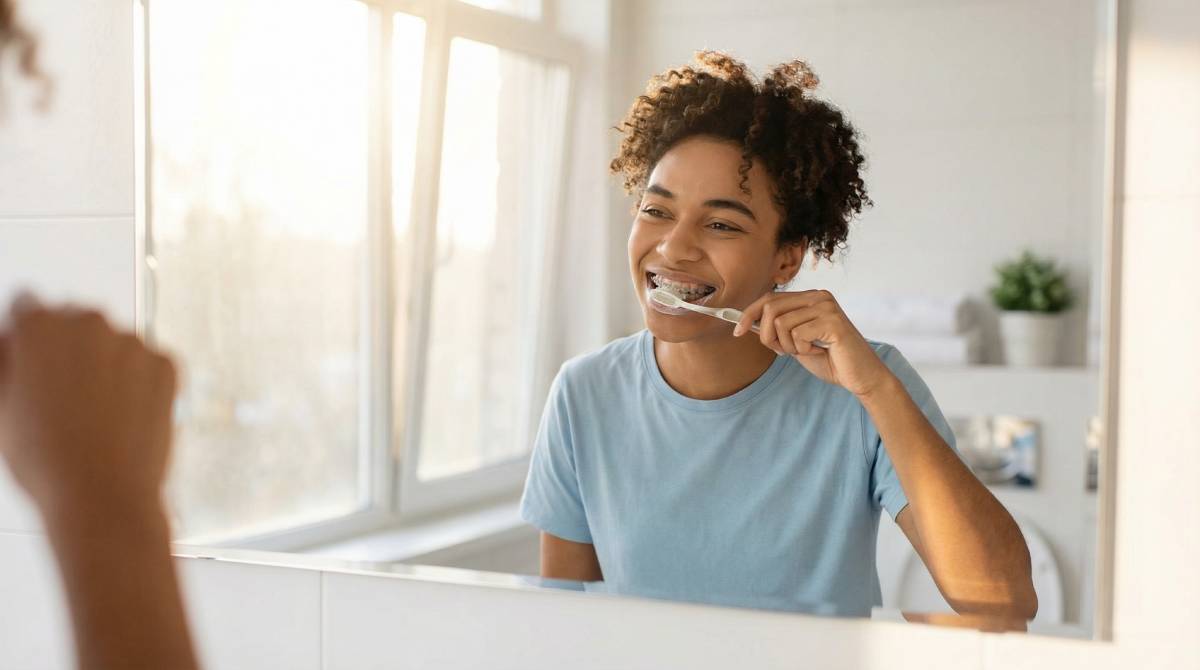
March is National Nutrition Month, but every month is oral health month when you have braces. The brackets, wires, and bands that straighten teeth also create countless places for food particles and plaque to hide.
Proper brushing and flossing technique matter more with braces than at any other time in your life. Here’s how to do it right.
Why It’s Harder With Braces
Without braces, brushing and flossing are straightforward. Brush all surfaces, floss between teeth, done. Braces complicate everything:
- Brackets create ledges where food collects above and below
- Wires prevent normal brush angles from reaching certain areas
- Bands around molars trap debris at the gumline
- Elastics and other attachments add more surfaces to clean
Patients who brushed adequately before braces often find their technique isn’t good enough anymore. The extra hardware demands extra attention.
Brushing Technique for Braces
Frequency: Brush after every meal, not just morning and night. Food stuck in braces all day causes more damage than food that’s removed promptly.
Angle your brush:
- Hold the toothbrush at a 45-degree angle to clean above the brackets, directing bristles toward the gumline
- Then angle downward to clean below the brackets
- Brush the brackets themselves with a straight-on approach
Take your time: Two minutes minimum, but most people with braces need three to four minutes to do a thorough job. Set a timer if you tend to rush.
Don’t forget:
- The chewing surfaces of your teeth
- The inside surfaces (tongue side)
- Along the gumline where plaque builds up
- Behind your back molars
Electric vs. manual: Electric toothbrushes with small, round heads often do a better job around brackets. The oscillating motion helps dislodge particles that manual brushing misses. Sonic toothbrushes work well, too.
Flossing With Braces
Flossing with braces takes longer and requires some tools, but it’s not optional. Skipping flossing leads to cavities between teeth, gum inflammation, and white spot lesions that become visible when braces come off.
Floss threaders:
- Thread the floss through the threader
- Push the threader under the wire
- Pull the floss through and floss normally between teeth
- Repeat for each gap
Yes, this takes time. Budget five to ten minutes for thorough flossing.
Orthodontic flossers:
- Pre-made flossers designed to slide under wires
- Faster than threaders but sometimes less thorough
- Good for quick clean-ups when you don’t have time for full flossing
Water flossers:
- Use pressurized water to blast debris from around brackets
- Great supplement to regular flossing, but not a complete replacement
- Especially helpful for patients who struggle with threaders
Interdental Brushes: The Secret Weapon
Those tiny brushes that look like miniature pipe cleaners? They’re incredibly useful for braces.
Use them to:
- Clean under wires where toothbrush bristles can’t reach
- Scrub around bracket edges
- Clean between teeth when flossing isn’t practical
- Do quick clean-ups after meals
Keep a few in your backpack, purse, or desk drawer for mid-day cleaning.
What Happens If You Don’t Clean Properly
The consequences of poor oral hygiene with braces show up in several ways:
- White spot lesions: Decalcified areas that appear as white squares when braces come off—they’re permanent
- Cavities: Especially between teeth and at the gumline
- Swollen, bleeding gums: Gingivitis from plaque buildup
- Bad breath: Bacteria thriving in trapped food particles
- Longer treatment time: Severe hygiene problems can require removing braces temporarily
None of these outcomes are what you want after investing time and money in orthodontic treatment.
Making It Routine
The key to consistent oral hygiene is building habits that don’t require willpower:
- Keep supplies everywhere you need them (bathroom, backpack, locker, car)
- Set phone reminders if you’re prone to forgetting
- Brush at the same time every day so it becomes automatic
- Make flossing part of your bedtime routine, not something you skip when tired
Questions about brushing or flossing technique? Ask at your next appointment at Enjoy Orthodontics in Grandville or Holland. We’re happy to demonstrate and troubleshoot.