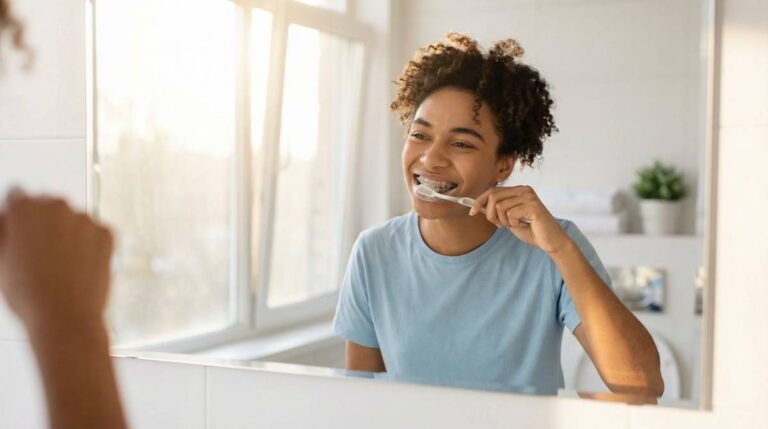
Winter break is the longest school vacation of the year. Students from Grandville, West Ottawa, and Holland schools typically get two full weeks off, from mid-December through early January. That’s 14 days without the structure of school schedules, morning routines, or predictable mealtimes. For kids in orthodontic treatment, this extended break presents the biggest challenge of the year for maintaining consistent orthodontic care.
Dr. Porto sees the evidence of winter break struggles when patients return for January appointments. Some kids maintained their routines flawlessly. Others show up with more plaque buildup than usual, reports of forgotten rubber bands, or even broken brackets from holiday treats. The difference usually comes down to whether families planned ahead for how to maintain orthodontic care during two weeks of unstructured time.
Why Winter Break Is Harder Than Thanksgiving Break
Thanksgiving break lasted four or five days. Winter break lasts twice as long, which means twice as many opportunities for routines to fall apart. The first few days of winter break might go smoothly as families maintain some structure. By day seven or eight, when the novelty of being off school has worn off and days blur together, orthodontic care often becomes an afterthought.
Winter break also involves more travel, more parties, and more disruption than Thanksgiving. Families might make multiple trips to visit different relatives. They attend holiday gatherings, New Year’s Eve celebrations, and various seasonal events. Each of these disruptions makes maintaining consistent orthodontic routines harder.
The holiday season adds another layer of complexity. Halloween candy came and went. Thanksgiving had one big meal. But Christmas treats are everywhere for weeks, and kids are constantly exposed to foods that challenge their orthodontic restrictions.
Setting Expectations Before Break Starts
The last day of school before winter break is the perfect time to have a clear conversation with your child about orthodontic care expectations for the next two weeks.
Make the non-negotiables crystal clear: Brushing twice daily and flossing once daily remain mandatory every single day of break, even Christmas morning, even New Year’s Eve, even days when nothing else feels structured.
Acknowledge what will be different: You’re not expecting perfect timing or flawless execution. You understand that brushing might happen at 1pm instead of 7am some days. What you’re expecting is that it happens, even if timing is irregular.
Discuss specific challenges: If your family is traveling for a week, talk about how orthodontic care will work in hotels or at relatives’ houses. If your child will be home alone some days while parents work, discuss how they’ll remember to maintain their routine without external reminders.
Review foods to avoid: Before break starts, refresh your child’s memory about holiday treats that are off-limits. Don’t assume they remember conversations from Halloween or earlier in the year.
The Extended Sleep Schedule Problem
During the school year, your child wakes up at roughly the same time every morning, which means brushing happens at a predictable time. During winter break, many kids sleep until noon or later, especially teenagers who are chronically sleep-deprived during the school year.
Sleeping late isn’t inherently problematic. The problem is when “morning brush” gets skipped entirely because sleeping until 2pm doesn’t feel like morning anymore.
Solutions that work:
Redefine morning brush as “first brush after waking” regardless of when that happens. If your child wakes at noon, they brush at noon. If they wake at 3pm, they brush at 3pm. The timing shifts, but the habit remains.
Set a brush-by deadline. Maybe the rule is that brushing must happen by 2pm regardless of when your child wakes up. This creates a backstop that prevents the entire day from passing without any orthodontic care.
For kids who genuinely need catch-up sleep during break, allow it without guilt, but maintain the expectation that brushing happens on a twice-daily schedule even if those times don’t resemble school-year schedules at all.
Technology as Routine Replacement
Phone alarms and reminders can substitute for the natural routine cues that disappear during winter break. During the school year, getting dressed for school reminds your child to brush. Getting ready for bed reminds them to floss. During break, these cues vanish.
Set up multiple daily reminders:
A late morning alarm (10am or 11am) that says “Brush your teeth” helps even kids who sleep late remember to complete morning oral care.
An evening alarm (9pm or 10pm) serves as a reminder to complete nighttime orthodontic care before getting absorbed in video games or movies.
For kids who wear rubber bands, set specific reminders for each change time. These need to happen on schedule regardless of whether school is in session.
Make alarms impossible to dismiss without action. Some parents require kids to send a quick text confirming brushing is done before the alarm can be turned off. This creates accountability.
Managing Multiple Households During Break
Many families split time between different households during winter break. Kids might spend a week with one parent, then a week with another. Or they might spend Christmas Eve at one grandparent’s house and Christmas Day at another. Each location change disrupts routines and makes orthodontic care harder to maintain.
Strategies for managing multiple locations:
Pack complete orthodontic kits for each location. Don’t rely on moving one kit back and forth between houses. Having duplicate supplies at each place eliminates the excuse of forgetting the toothbrush at Dad’s house.
Communicate with all adults involved in your child’s care about orthodontic expectations. If your child is staying with grandparents for several days, make sure Grandma knows that brushing and flossing aren’t optional even during vacation.
For kids bouncing between locations, consider making the nighttime brush and floss the most important one. Morning routines often get disrupted by packing, traveling, and settling into new locations. But wherever your child sleeps that night, thorough evening care should happen before bed.
The Christmas Eve and Christmas Day Marathon
Christmas Eve and Christmas Day present unique challenges because they often involve extended family gatherings, multiple meals in different locations, and extremely disrupted schedules. Your child might be up at 6am to open presents, then not get to bed until midnight after multiple celebrations.
Making orthodontic care happen on the busiest days:
Schedule at least one thorough brush and floss session during the day, ideally after the main meal. This might not be at the “normal” time, but it addresses the biggest food exposure of the day.
The bedtime brush and floss is absolutely mandatory on Christmas Eve and Christmas Day, even if everyone is exhausted. This prevents 24+ hours of accumulated food and sugar sitting around brackets.
Keep supplies visible and accessible. If you’re hosting, put orthodontic supplies in the main bathroom. If you’re traveling, keep your child’s kit where they can grab it easily without having to dig through luggage.
Pack extra supplies beyond the normal kit. Christmas celebrations can run long, and if your child needs to apply wax or finds they forgot something, having extras on hand prevents problems.
New Year’s Eve and Sleeping Away From Home
New Year’s Eve celebrations often mean kids staying up until midnight or later, attending parties, or sleeping at friends’ houses. This creates orthodontic care challenges because normal bedtime routines don’t happen at normal times, if they happen at all.
If your child is attending a sleepover or party, send them with a complete travel orthodontic kit. This means toothbrush, toothpaste, floss, wax, and anything else they might need. Don’t assume the host family will have orthodontic-friendly supplies available.
Set clear expectations before they leave. They need to brush and floss before bed even if it’s 2am when the party winds down. Even if their friends aren’t brushing. Even if it feels awkward.
For kids attending parties at your house, make orthodontic supplies available in a guest bathroom and remind your child to use them before bed regardless of when that happens.
The Winter Sports Schedule
For athletes, winter break doesn’t mean a break from sports. Basketball, hockey, and wrestling seasons are in full swing. Some athletes have tournaments scheduled during the break. This adds another layer of complexity to maintaining orthodontic routines.
Athletes need to pack orthodontic supplies in their equipment bags so they can brush after meals and before/after games. A water bottle for rinsing during tournaments helps manage food particles when thorough brushing isn’t immediately possible.
For families traveling to tournaments during winter break, the athletic schedule might actually help maintain structure. Games and practices create anchors around which other routines, including orthodontic care, can be scheduled.
Make sure athletes wear their mouthguards during all games and practices, even informal pickup games during break. Holiday tournament games can get intense, and protection is just as important during break as during regular season.
The Relative Who Doesn’t Get It
Every family has at least one relative who doesn’t understand or remember orthodontic restrictions. They offer your child candy canes at every gathering. They bake pecan pie specifically because it’s your child’s favorite and don’t understand why braces mean it’s off-limits now. They suggest activities like eating caramel apples at winter festivals without considering bracket risks.
Handling these situations gracefully:
Brief relatives before gatherings when possible. A quick text or phone call explaining what your child can and cannot eat prevents awkward moments later.
Teach your child polite ways to decline unsafe foods. “Grandma, I love your pecan pie but I can’t eat it with braces. Do you have any of your sugar cookies?” redirects rather than just saying no.
Don’t make relatives feel bad for not remembering restrictions. Orthodontic care isn’t at the forefront of most people’s minds, especially relatives who only see your child a few times a year.
Pack safe snacks for your child to eat at gatherings where you know food options will be limited or problematic. This way they’re not hungry and tempted by unsafe foods.
When Kids Are Home Alone
For older kids and teenagers, winter break might involve days home alone while parents work. This creates situations where kids are completely responsible for their own orthodontic care without any parental oversight.
Before leaving kids home alone for extended periods, have explicit conversations about expectations. Go through the daily routine and confirm they understand what’s required.
Consider check-ins via text or phone. A midday message asking “Have you brushed your teeth yet?” provides external accountability for kids who need it.
Some families use photos as accountability. The teen texts a photo of their clean teeth or a photo of themselves holding their toothbrush as confirmation that care happened. This sounds silly, but it works for kids who struggle with self-discipline.
Stock all necessary supplies before leaving kids home alone. They shouldn’t be trying to find orthodontic wax at the drugstore while you’re at work. Everything they might need should be easily accessible at home.
The Post-Travel Reset
After returning from holiday travel or finishing a week of disrupted routines, schedule a reset day where orthodontic care gets extra attention. Have your child do a thorough brush and floss, checking carefully for any areas that got neglected during the chaos of break.
Restock all depleted supplies. If orthodontic wax ran out during break, replace it. If rubber bands are down to the last few, get more. If the toothbrush looks worn, replace it.
Use the return to normal schedules as an opportunity to re-establish routines. The first day back to regular schedules is the perfect time to return to consistent morning and evening orthodontic care at predictable times.
Dealing with Broken Brackets During Break
Despite best efforts, brackets sometimes break during winter break. Holiday treats, disrupted routines, and relaxed supervision create conditions where accidents happen.
Our Grandville and Holland offices are closed December 24th-25th and December 31st-January 1st. The emergency line remains available for urgent situations, but most bracket breaks can be managed temporarily with wax until offices reopen.
If a bracket breaks during office closures, don’t panic. Apply orthodontic wax to secure loose brackets or cover poking wires. Give your child over-the-counter pain reliever if needed. Call our office when we reopen to schedule a repair appointment.
Use bracket breaks as teaching moments rather than punishment opportunities. Discuss what happened, how to prevent similar situations in the future, and reinforce the importance of following food restrictions and care guidelines.
The Rubber Band Compliance Challenge
For patients who wear rubber bands, winter break is when compliance often drops significantly. Kids forget to change them on schedule, run out without replacing them, or stop wearing them entirely because “it’s vacation.”
Rubber bands only work if worn consistently. Missing a week during winter break essentially wastes the previous month’s effort. This isn’t meant to create anxiety, but kids need to understand why compliance matters even during vacation.
Set specific times for rubber band changes and use phone alarms as reminders. Without the structure of school schedule to anchor these changes, external reminders become essential.
Keep rubber bands in multiple locations during break. Car, bedroom, bathroom, coat pocket, anywhere your child might be when it’s time to change them. Accessibility increases compliance.
Check in daily about rubber band wear. A simple “Are you wearing your rubber bands?” question reminds your child that this remains important even during break.
The Sibling Comparison Problem
If you have multiple children and only one has braces, winter break can create friction. The child without braces can eat candy canes and caramel while the child with braces cannot. This feels unfair, especially during a season focused on treats and indulgence.
Managing sibling dynamics:
Acknowledge the unfairness without trying to fix it. Yes, it’s harder to have braces during the holidays. That doesn’t mean siblings should be restricted just to make things feel equal.
Emphasize what the child with braces can eat rather than focusing on restrictions. There are plenty of safe treats available.
Consider a trading system where the child with braces trades unsafe treats to siblings for safe ones or for other items they want.
Remind the child with braces that their treatment is temporary. Next year’s holidays might look completely different.
Planning for January
The last few days of winter break are the perfect time to prepare for returning to school and normal routines. Go through orthodontic supplies and restock anything that’s running low. Check that rubber band supplies are adequate. Replace toothbrushes if needed.
Schedule a thorough orthodontic care session on the last day of break to start the new year fresh. This is especially important if care was inconsistent during the two weeks off.
If any brackets broke or wires came loose during break, call our Grandville or Holland office first thing when we reopen to schedule repair appointments. Don’t let minor problems from December linger into January.
Use the return to school as motivation to re-establish consistent routines. Your child managed two weeks of unstructured time. Now they get to return to predictable schedules that support good orthodontic habits.
The Big Picture on Winter Break
Winter break represents about 10 days out of 18-24 months of orthodontic treatment (accounting for weekends and other school breaks throughout the year). Perfect orthodontic care every single day of break isn’t the goal and isn’t realistic.
The goal is maintaining enough consistency that treatment stays on track and problems don’t develop. If your child brushes twice daily and flosses once daily during break, even if timing is irregular, that’s successful. If they wear rubber bands most of the time even if they occasionally forget, that’s acceptable. If they avoid the truly dangerous treats even if they eat some questionable ones, that’s fine.
Dr. Porto understands that winter break is uniquely challenging. We don’t expect perfection during two weeks when everything else is disrupted. We do expect families to maintain the core habits that keep treatment progressing and prevent serious problems. With planning, clear communication, and reasonable expectations, this is completely achievable even during the longest school break of the year.
Questions about managing orthodontic care during winter break? Need to schedule a post-break appointment or repair? Contact Enjoy Orthodontics in Grandville or Holland. We’re here to support your family through the holiday season and beyond.